When Stroke Occurs, Every Minute Matters.
Fast, accurate treatment for stroke victims is critical for preserving brain function and preventing death. As a certified Comprehensive Stroke Center in St. Louis, MO, Barnes-Jewish Hospital stroke patients are treated faster than at most national emergency departments, and their recoveries are more successful. From stroke diagnosis and treatment to stroke rehabilitation and research, Barnes-Jewish Hospital & Washington University are at the forefront of stroke care—giving our patients a better chance against this serious condition.
Why Choose a Comprehensive Stroke Center?
Learn the criteria that sets us apart as the first Comprehensive Stroke Center in Missouri. We are certified by the Joint Commission's highest standard. Stroke is an emergency, so trust your life to our top doctors.
Stroke Treatment
Our Comprehensive Stroke Center offers the most streamlined and effective emergency stroke care.
Comprehensive Care
Our acute stroke care team provides some of the fastest critical care in the country.
Types of Stroke
Learn about the different types of stroke and their causes.
Stroke Rehabilitation
Barnes-Jewish helps stroke victims regain their speech, sight, and movement skills.
Stroke Education
We are dedicated to raising stroke awareness for patients, families, and the community.
Stroke Network
The Stroke Network improves care for all stroke patients, regardless of where a patient is located.
2025 Stroke Metrics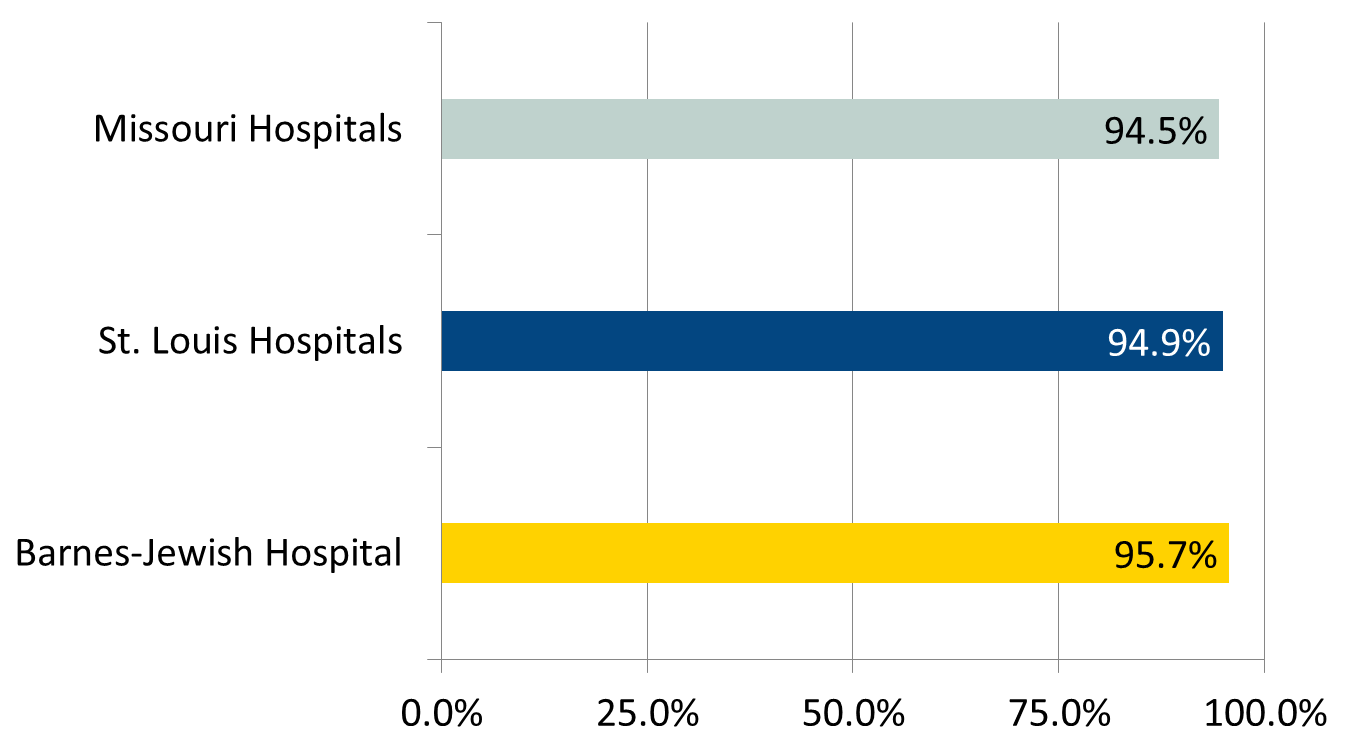
High volumes lead to more experience and better outcomes. See 2025 outcomes and metrics→
If you suspect stroke, call 9-1-1 to activate rapid response services and transport to a Stroke Network hospital.
To find out more about the Barnes-Jewish Hospital Stroke Center in St. Louis, MO, call 888.998.5497.